Reinterpreting Learning Preferences through Deep Learning Practices in Indonesian Senior High School English Classrooms
DOI:
https://doi.org/10.24903/sj.v11i1.2361Keywords:
Deep learning pedagogy; learning style discourse; Learner identity; Qualitative inquiry; Indonesian EFL context; Sociocultural variationAbstract
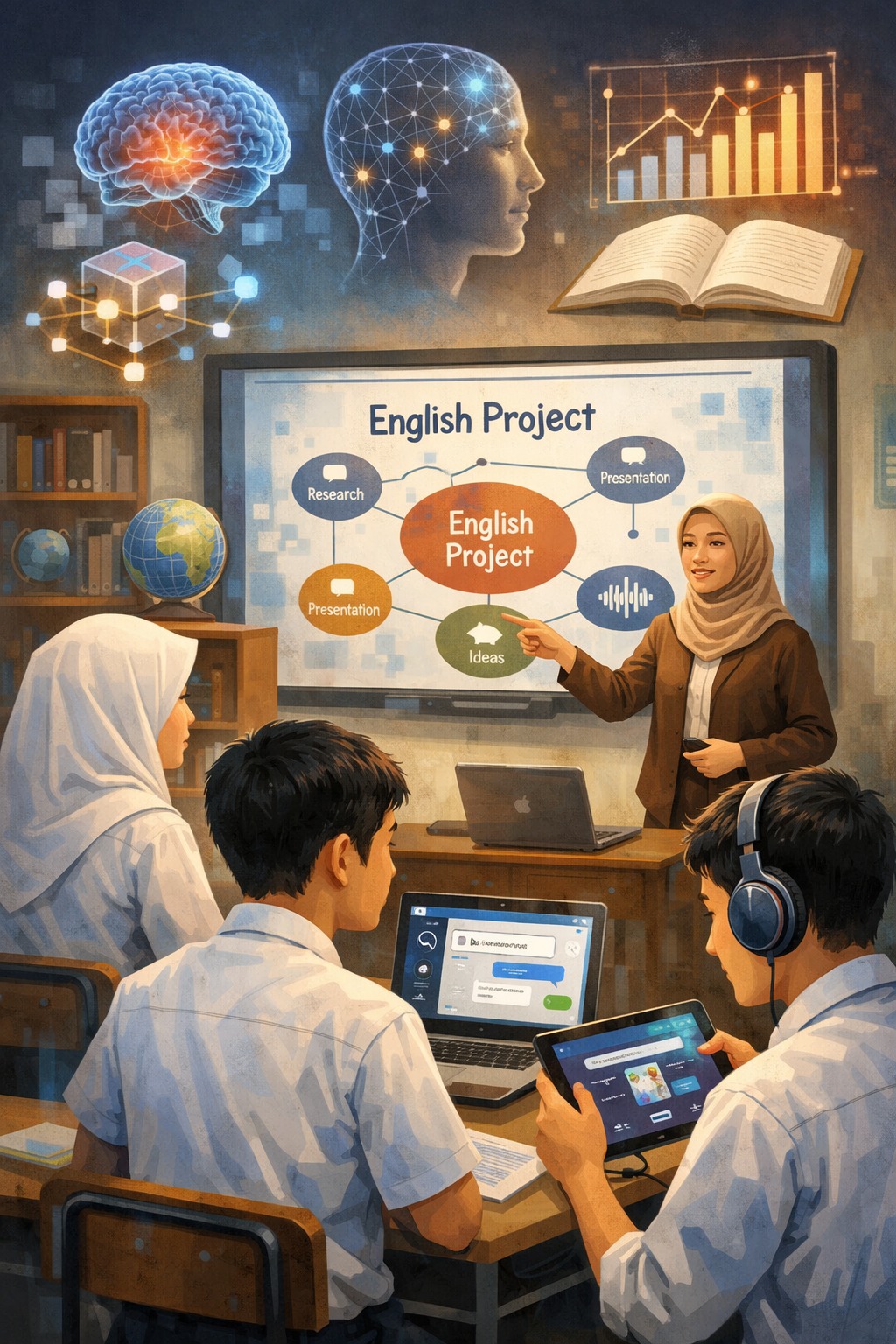
Background: In Indonesian senior high school English classrooms, English learning is increasingly expected to involve interpretation, reflection, and sustained engagement rather than simple recall. Yet many students still use learning style labels to explain difficulty, participation, and their own sense of fit with particular tasks, despite the limited scientific support for such claims. This study explores how students draw on that language to interpret challenge and learner positioning in deep learning-oriented classrooms across culturally diverse regions of Indonesia. Methodology: Using a qualitative interpretive design, this study drew on classroom observations, in-depth interviews, and reflective learning artifacts from twenty-five purposively selected senior high school students across five Indonesian provinces representing diverse sociocultural contexts. The qualitative data were analysed through reflexive thematic analysis, with attention to both site-specific meanings and patterns across provinces. Findings:Learning style labels did not appear to represent fixed cognitive ability. Instead, students often used them to explain why certain analytical tasks felt difficult or uncomfortable Through sustained participation in scaffolded deep learning activities, many students revised earlier self-perceptions that had cast them as ‘not analytical,’ not suited’ to long texts, or weak in writing. This revision was evident when interview accounts and classroom observations showed students moving from style-based explanations of difficulty toward more flexible interpretations grounded in practice, guidance, peer interaction, and increased confidence. Differences across contexts were also visible, particularly in whether students described difficulty in terms of anxiety, restraint, dialogic support, perseverance, or intellectual challenge.
Conclusion:
Students’ engagement in deep learning seems to depend less on perceived learning-style fit than on how they interpret difficulty in relation to themselves as learners The findings indicate that teaching could beneficially combine cognitive support with identity-sensitive scaffolding, flexible strategy use, and the normalization of intellectual struggle. Originality:Across multiple Indonesian contexts, the originality of this study lies in reframing learning-style discourse from a presumed cognitive typology into a socially and culturally mediated interpretive resource that students use to negotiate difficulty, participation, and learner identity in deep learning contexts.
References
Agyeman, N. Y. B. (2024). Deep learning in high schools: Exploring pedagogical approaches for transformative education. Humanika: Kajian Ilmiah Mata Kuliah Umum, 24(2), 111–126. https://doi.org/10.21831/hum.v24i2.71350
Ali, S. E., & Hadi, A. (2022). DUAL IDENTITY OR IDENTITY DUEL: EFL CONTEXT DUALITY FORCE ON IDENTITY ASPECTS FORMATION THROUGH LEARNERS’SELF-REFLECTION. Journal of Language and Education, 8(1 (29)), 130–147.
Ashencaen Crabtree, S. (2010). Engaging students from the United Arab Emirates in culturally responsive education. Innovations in Education and Teaching International, 47(1), 85–94. https://doi.org/10.1080/14703290903525929
Balpande, M., Patil, S., Rana, G., Ranalkar, V., Shaikh, A., & Badjate, S. (2024). Deepfake Detection System using Deep Learning Algorithms. 2024 8th International Conference on Computing, Communication, Control and Automation (ICCUBEA), 1–5. https://ieeexplore.ieee.org/abstract/document/10774743/
Brown, B. A. (2006). “It isn’t no slang that can be said about this stuff”: Language, identity, and appropriating science discourse. Journal of Research in Science Teaching, 43(1), 96–126. https://doi.org/10.1002/tea.20096
Clinton-Lisell, V., & Litzinger, C. (2024). Is it really a neuromyth? A meta-analysis of the learning styles matching hypothesis. Frontiers in Psychology, 15, 1428732.
Dai, L., & Sihes, A. B. (2023). Deep learning in EFL education in China: Definition and dimensions. International Journal of Academic Research in Business and Social Sciences, 13(11). https://kwpublications.com/papers_submitted/7663/deep-learning-in-efl-education-in-china-definition-and-dimensions.pdf
Deng. R, B., & Yifan, G. (2022). Limited usefulness of learning style instruments in advancing teaching and learning—UQ eSpace. https://espace.library.uq.edu.au/view/UQ:585d496
Gultom, A. M., & Ashadi, A. (2024). Translanguaging in Multilingual Context: Graduate Students’ Voices From Yogyakarta, Indonesia. ISSN: 2189-101X – The Asian Conference on Education & International Development 2024 Official Conference Proceedings, 135–147.
Gümüş Mantu, P. (2023). Redefining the Political. Youth Experiences of Collective Action in Turkey. Springer Fachmedien Wiesbaden. https://doi.org/10.1007/978-3-658-40565-6
Hasbi, M. (2025). Navigating Teaching, Research, and Community Service: Tridharma Practices for English Lecturers. IAIN SALATIGA. https://www.researchgate.net/profile/Muhamad-Hasbi-3/publication/398370612_Navigating_Teaching_Research_and_Community_Service_Tridharma_Practices_for_English_Lecturers/links/6932e36b27359023a0098538/Navigating-Teaching-Research-and-Community-Service-Tridharma-Practices-for-English-Lecturers.pdf
He, J., & Ma, T. (2025). Deep learning-oriented pedagogy in secondary English classrooms: A review of recent developments—Google Search. https://www.tandfonline.com/doi/abs/10.1080/14703297.2025.2569510
Heidari, A., Jafari Navimipour, N., Dag, H., & Unal, M. (2024). Deepfake detection using deep learning methods: A systematic and comprehensive review. WIREs Data Mining and Knowledge Discovery, 14(2), e1520. https://doi.org/10.1002/widm.1520
Javadi, Y., & Tahmasbi, M. (2020). Application of sociocultural identity theory to education in EFL textbooks development. Theory and Practice in Language Studies, 10(5), 536–541.
Kettani, M. T., & Ouahidi, L. M. (2025). Interactions between Classroom Discourse and Cultural Identities. International Journal of Language and Literary Studies, 7(1), 87–107.
Khumukcham, B. (2024). UNRAVELING THE ESSENCE OF MOTIVATION IN LANGUAGE LEARNING | ShodhKosh: Journal of Visual and Performing Arts. https://www.granthaalayahpublication.org/Arts-Journal/ShodhKosh/article/view/3043
Kolb, D. A. (2007). The Kolb learning style inventory. Hay Resources Direct Boston, MA. https://www.researchgate.net/profile/David-Kolb-2/publication/303446688_The_Kolb_Learning_Style_Inventory_40_Guide_to_Theory_Psychometrics_Research_Applications/links/57437c4c08ae9f741b3a1a58/The-Kolb-Learning-Style-Inventory-40-Guide-to-Theory-Psychometrics-Research-Applications.pdf
Kolb, D. A., Boyatzis, R. E., & Mainemelis, C. (2014). Experiential learning theory: Previous research and new directions. In Perspectives on thinking, learning, and cognitive styles (pp. 227–247). Routledge. https://api.taylorfrancis.com/content/chapters/edit/download?identifierName=doi&identifierValue=10.4324/9781410605986-9&type=chapterpdf
Li, W. (2025). The Current Status of Empirical Research on Deep learning within the Educational Domain. International Journal of Education and Humanities, 18(1), 106–110.
Lyle, K. B., Young, A. S., Heyden, R. J., & McDaniel, M. A. (2023). Matching learning style to instructional format penalizes learning. Computers and Education Open, 5, 100143.
Maranna, S., Willison, J., Joksimovic, S., Parange, N., & Costabile, M. (2022). Factors that influence cognitive presence: A scoping review. Australasian Journal of Educational Technology, 38(4), 95–111.
Matsumura, L. C., Wang, E. L., Correnti, R., & Litman, D. (2023). Tasks and feedback: An exploration of students’ opportunity to develop adaptive expertise for analytic text-based writing. Assessing Writing, 55, 100689.
McGregor, S. L. (2020). Emerging from the deep: Complexity, emergent pedagogy and deep learning. Northeast Journal of Complex Systems (NEJCS), 2(1), 2.
McPhee, S. (2020). Cultural learning preferences, blended learning, and the. Digital Experiences of International Students: Challenging Assumptions and Rethinking Engagement, 106.
Ndofirepi, E. S., Moosa, R., Reed, M. J., & Maodzwa-Taruvinga, M. (2023). Perceived life balance, cultural experience, and academic outcomes: A comparative study of first-generation students in South Africa and Canada. Scholarship of Teaching and Learning in the South, 7(2), 21–45.
Newton, P. M., & Salvi, A. (2020). How common is belief in the learning styles neuromyth, and does it matter? A pragmatic systematic review. Frontiers in Education, 5, 602451. https://www.frontiersin.org/journals/education/articles/10.3389/feduc.2020.602451/full?trk=public_post_comment-text
Norhasanah, N., Yusuf, F. N., & Suherdi, D. (2022). EFL LEARNERS’PREFERENCES AND PERSPECTIVES ON LEARNING STYLES. Language Literacy: Journal of Linguistics, Literature, and Language Teaching, 6(2), 382–399.
Norton, B. (2006). Identity as a sociocultural construct in second language research. TESOL in Context [Special Issue], 22–33.
Peng, C. (2025). Monitoring the Invisible: Metacognitive Monitoring Strategies Uncover Hidden Barriers in EFL Deep Reading. Cognitive Strategies in Study, 1(2), 1–9.
Sajjad, M. (2025). Building the future: Comparative perspectives on ECE curriculum, access, and quality in Pakistan and Indonesia. Journal of Childhood Literacy and Societal Issues, 4(2), 1–19.
Saragih, E., Sinaga, N. T., Rumapea, E. L. B., Sipayung, R. W., Tarigan, S. N., & Daulay, I. K. (2024). Constructing Research Preferences by Prospective Indonesian EFL Teachers. Journal of Language Teaching and Research, 15(4), 1351–1360.
Silistraru, N., & Vetrila, S. (2023). Metacognition as a component of intelligent behavior. Vector European, 2, 124–128.
Sommerville, T. (2016). Language of Learning: Policy, Personal Preference, and Professional Identity. Alternation Journal, 23(1), 158–179.
Soozandehfar, S. M. A., & Sahragard, R. (2015). Sociocultural identity development scaffolded by collaboration-conducive strategies: A case of an Iranian EFL writing class. Journal of English Language Teaching and Learning, 7(15), 125–156.
SwarSuri, S. (2024). Teachers’ Strategies to Enhance Deeper Learning Skills in English Language Classes. International Journal of Linguistics, Literature & Translation, 7(3). https://openurl.ebsco.com/EPDB%3Agcd%3A8%3A33064248/detailv2?sid=ebsco%3Aplink%3Ascholar&id=ebsco%3Agcd%3A177530117&crl=c&link_origin=scholar.google.com
Veenman, M. V. J., Prins, F. J., & Verheij, J. (2003). Learning styles: Self‐reports versus thinking‐aloud measures. British Journal of Educational Psychology, 73(3), 357–372. https://doi.org/10.1348/000709903322275885
Zhang, Y. (2020). Developing EFL students’ critical thinking competence in English reading class. Creative Education, 11(07), 1145.
Zrudlo, I. (2023). Why the learning styles myth appeals and how to persuade believers otherwise. Teaching and Teacher Education, 132, 104266.
Downloads
Published
Issue
Section
License
Copyright (c) 2026 Ahmad Ghufran Ferdiant, Ghofur, Yunia, KJ Vargheese

This work is licensed under a Creative Commons Attribution-ShareAlike 4.0 International License.
Authors retain copyright and grant the journal right of first publication with the work simultaneously licensed under a Creative Commons Attribution 4.0 International License that allows others to share the work with an acknowledgement of the work's authorship and initial publication in this journal.