Speaking behind Avatars: EFL Students’ Experiences in AI-Assisted Lip-Sync Video Production for Monologue Speaking Practice
DOI:
https://doi.org/10.24903/sj.v11i2.2403Keywords:
EFL monologue speaking, students' experiences, AI lip sync video, avatarAbstract
Background:Many EFL students at junior high schools continue to experience speaking anxiety and low self-confidence, including when performing basic monologue speaking. While multimodal AI has increasingly been incorporated into EFL speaking instruction, its use in monologue practice is underexplored. In this context, employing AI Avatar Lip-sync tools may provide an engaging and comfortable speaking experience. Therefore, this study investigated learners’ affective, engagement, and technological experiences during the learning process.
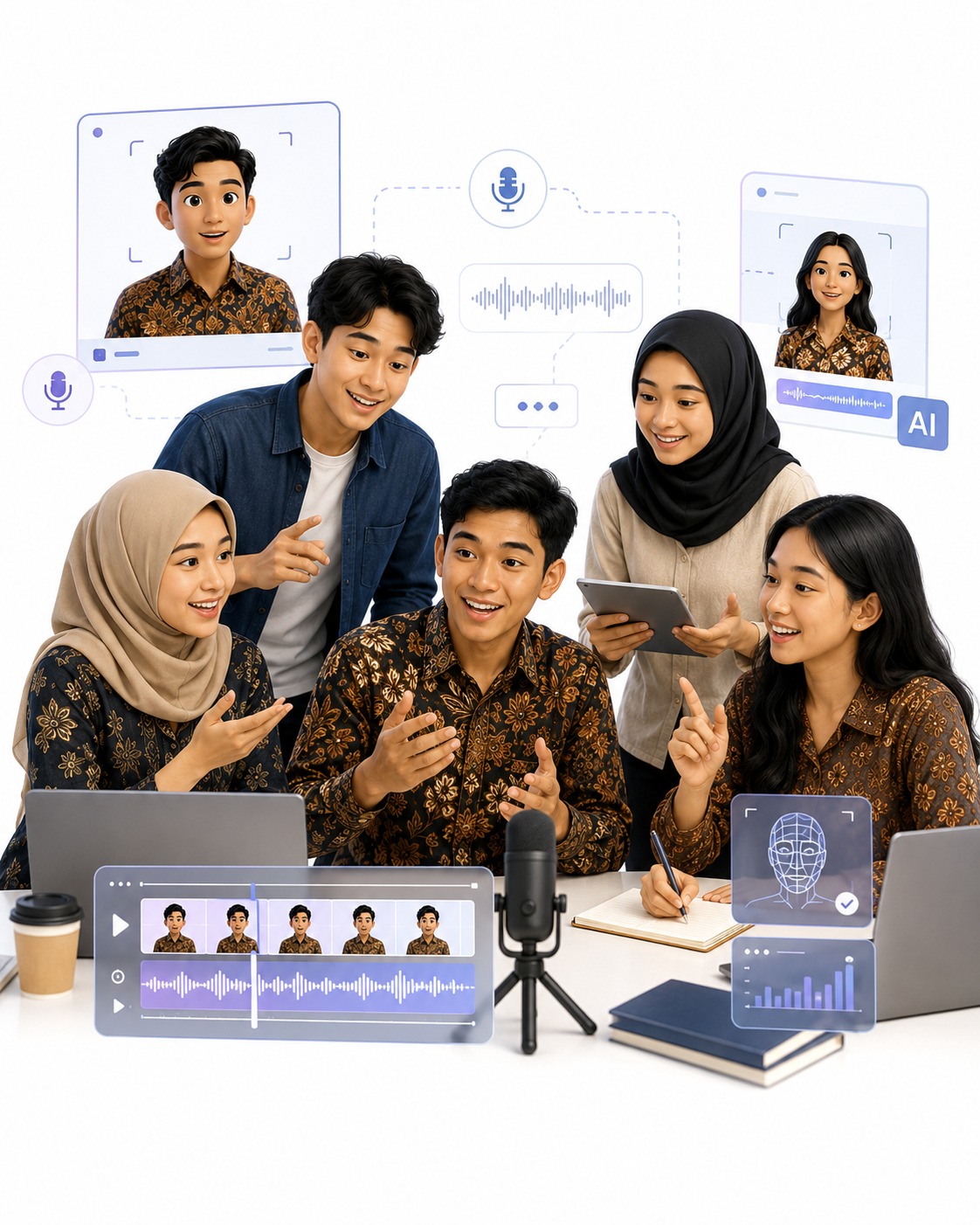
Methodology: This convergent mixed-methods study involved 28 eighth-grade students. They were instructed to create AI-generated avatars and record monologues, which were automatically transformed into lip-synchronized animation videos using Pippit AI. Data on their detailed experiences were collected through classroom observations and a questionnaire, then analyzed using thematic analysis and descriptive statistics. Both datasets were then integrated by examining areas of convergence, complementarity, and divergence, thereby providing a more comprehensive understanding of students’ learning experiences. Findings:Quantitative findings revealed high levels of affective (M = 3.95), engagement (M = 4.09), and technological (M = 3.79) experiences. Qualitative findings showed that students enjoyed creating their avatars and voluntarily repeated speaking practice. Additionally, they reported that speaking through avatars made them more relaxed because their faces were not exposed. Despite several technical challenges, students remained enthusiastic throughout the activity and expressed high satisfaction with the final videos.
Conclusion:The findings suggest that monolog speaking practice using AI avatar lip-sync has the potential to provide a positive experience across affective, engagement, and technological dimensions. Students reported high enjoyment and self-monitoring through repeated practice, while feeling more relaxed and comfortable when speaking without face exposure. Despite several technical challenges, students expressed high satisfaction with the outcome videos. These findings highlight the potential of AI avatar lip-sync automation in supporting EFL speaking practices.
Originality:Most existing studies on AI-assisted speaking predominantly focus on real-time, interactive communication skills, while the combination of recorded monologue practice and AI lip-sync avatar production in EFL junior high school contexts was underexplored. Accordingly, this study addressed the gap by examining students’ experiences with AI lip-sync avatar production for recorded monologue practice.
References
Aldosari, M. S. (2024). Another World with Artificial Intelligence in Speaking Classes: To Delve into the Influences on Willingness to Communicate, Personal Best Goals, and Academic Enjoyment. Computer-Assisted Language Learning Electronic Journal, 25(4), 439–463. https://callej.org/index.php/journal/article/view/470
Almukhaild, H., & King, J. (2024). Scaling the apex of engagement: Anxious language learners’ positive flow experiences during speaking tasks. System, 124, 103373. https://doi.org/10.1016/J.SYSTEM.2024.103373
Bakhtiari, E., Suriano, R., & Grasso, G. M. (2026). AI avatars in education: effects on knowledge acquisition, academic motivation, and cognitive load. Frontiers in Psychology, 17, 1860755. https://doi.org/10.3389/FPSYG.2026.1860755
Braun, V., & Clarke, V. (2006). Using Thematic Analysis in Psychology. Qualitative Research in Psychology, 3(2), 77–101. https://doi.org/10.1191/1478088706qp063oa
Bui, G. (2026). Effects of task interactivity and willingness to communicate on speech fluency in second language learning tasks. RELC Journal, 1–20. https://doi.org/10.1177/00336882261422018
Creswell, J. W. (2015). Educational Research: Planning, Conducting, and Evaluating Quantitative and Qualitative Research. Pearson.
Creswell, J. W., Plano-Clark, V. L., Gutmann, M. L., & Hanson, W. E. (2003). Advanced Mixed Methods Research Designs. In Handbook of Mixed Methods in Social and Behavioral Research. SAGE Publications.
Csikszentmihalyi, M. (1990). Flow: The psychology of optimal experience. Harper & Row.
Ding, W., & Lian, X. (2020). Examining Young Learners: Research and Practice in Assessing the English of School-Aged Learners. Language Assessment Quarterly, 17(3), 331–335. https://doi.org/10.1080/15434303.2020.1754830
Ebadi, S., Velayati, S., Ramezanzadeh, A., & Rawdhan Salman, A. (2025). Exploring The Impact of AI-Powered Speaking Tasks on EFL Learners’ Speaking Performance and Anxiety: An Activity Theory Study. Acta Psychologica, 259, 105391. https://doi.org/10.1016/J.ACTPSY.2025.105391
Fauzi, R., Restendi, D., Nugraha, F., & Ayundhari, V. L. (2025). Creating Immersive Learning Experiences With AI: An Android App Approach. JENTRE, 5(2), 104–109. https://doi.org/10.38075/JEN.V5I2.521
Gong, Z., & Kanai, H. (2025). Effects of appearance modifications on oral presentation anxiety in video conferencing. Scientific Reports 2025 15:1, 15(1), 30090. https://doi.org/10.1038/s41598-025-15716-z
Gupta, A., Kumar, J., Tewary, T., & Virk, N. K. (2022). Influence of Cartoon Characters on Generation Alpha in Purchase Decisions. Young Consumers, 23(2), 282–303. https://doi.org/10.1108/YC-06-2021-1342
Hai, T. T., Mai, D. T. T., & Hanh, N. Van. (2026). A rapid review of using AI-generated instructional videos in higher education. Frontiers in Computer Science, 7, 1721093. https://doi.org/10.3389/fcomp.2025.1721093
Hasan, E., Altakhaineh, A. R. M., & Chahwan, R. (2025). Study on the Effect of Self-Monitoring Tasks on Improving Pronunciation of Foreign Learners of Korean in Blended Courses. Open Education Studies, 7(1). https://doi.org/10.1515/edu-2025-0069
Heutte, J., Fenouillet, F., Martin-Krumm, C., Gute, G., Raes, A., Gute, D., Bachelet, R., & Csikszentmihalyi, M. (2021). Optimal Experience in Adult Learning: Conception and Validation of the Flow in Education Scale (EduFlow-2). Frontiers in Psychology, 12, 828027. https://doi.org/10.3389/fpsyg.2021.828027
Hidayatullah, M. H., Suryati, N., Cahyono, B. Y., & Mawaddah, N. (2025). A Systematic Literature Review of Artificial Intelligence in Academic Writing: Challenges and Opportunities. Journal of Research on English and Language Learning (J-REaLL), 6(2), 249–266. https://doi.org/10.33474/J-REALL.V6I2.23821
Hirata, Y. (2023). Do avatar-assisted virtual classrooms work for students with low speaking confidence?: A qualitative study. Interactive Technology and Smart Education, 20(3), 335–349. https://doi.org/10.1108/ITSE-10-2022-0142
Huang, F., & Zou, B. (2024). English Speaking with Artificial Intelligence (AI): The Roles of Enjoyment, Willingness to Communicate With AI, and Innovativeness. Computers in Human Behavior, 159, 108355. https://doi.org/10.1016/J.CHB.2024.108355
Huang, S. E., & Liu, Y. T. (2022). How to Talk to Myself: Optimal Implementation for Developing Fluency in EFL Speaking Through Soliloquizing. English Teaching & Learning, 47(2), 145. https://doi.org/10.1007/S42321-022-00110-Z
Hwang, Y., & Lee, J. H. (2025). “Yes, I Am More Confident with My Avatars”: Integrating EFL Students’ Speaking Practice into Metaverse. RELC Journal, 56(3), 760–771. https://doi.org/10.1177/00336882241251952
Ichino, J., Ide, M., Yokoyama, H., Asano, H., Miyachi, H., & Okabe, D. (2022). “I’ve talked without intending to”: Self-disclosure and Reciprocity via Embodied Avatar. Proceedings of the ACM on Human-Computer Interaction, 6(CSCW2), 1–23. https://doi.org/10.1145/3555583
Jedrasiak, K., Wolanski, R. R., & Bereska, D. (2024). Algorithm of Behaviour of Virtual Avatars During Public Speaking Training in a VR Environment. SAFETY & FIRE TECHNOLOGY, 64(2), 46–54. https://doi.org/10.12845/SFT.64.2.2024.3
Ji, X., Liao, Z., Dong, L., Tang, Y., Li, G., & Mao, M. (2024). 3D facial animation driven by speech-video dual-modal signals. Complex & Intelligent Systems, 10(5), 5951–5964. https://doi.org/10.1007/s40747-024-01481-5
Kabudi, T., Pappas, I., & Olsen, D. H. (2021). AI-Enabled Adaptive Learning Systems: A Systematic Mapping of The Literature. Computers and Education: Artificial Intelligence, 2, 100017. https://doi.org/10.1016/J.CAEAI.2021.100017
Kim, J., & Moon, J. (2025). Determinants of Usefulness of Chat GPT for Learning in Technology Acceptance Model (TAM) Using Information Credibility, Fun, and Responsiveness and Moderating Role of Fun. Sage Open, 15(1). https://doi.org/10.1177/21582440251320173
Krashen, S. D. (1985). Principles and Practice in Second Language Acquisition. Longman.
Larson, R., & Farber, B. (2019). Elementary statistics : picturing the world. Pearson Education, Inc.
Lee, J. S., & Chiu, M. M. (2023). Modeling EFL Learners’ Willingness to Communicate: The Roles of Face-to-Face and Digital L2 Communication Anxiety. Annual Review of Applied Linguistics, 43, 64–87. https://doi.org/10.1017/S0267190523000090
Leong, J., Perteneder, F., Rajvee, M. R., & Maes, P. (2023). “Picture the Audience...”: Exploring Private AR Face Filters for Online Public Speaking. Proceedings of the 2023 CHI Conference on Human Factors in Computing Systems, 1–13. https://doi.org/10.1145/3544548.3581039
Liu, G., & Ma, C. (2024). Measuring EFL learners’ use of ChatGPT in informal digital learning of English based on the technology acceptance model. Innovation in Language Learning and Teaching, 18(2), 125–138. https://doi.org/10.1080/17501229.2023.2240316
Liu, L., Wang, J., Chen, S., & Li, Z. (2024). VividWav2Lip: High-Fidelity Facial Animation Generation Based on Speech-Driven Lip Synchronization. Electronics 2024, Vol. 13, Page 3657, 13(18), 3657. https://doi.org/10.3390/ELECTRONICS13183657
Philp, J., & Duchesne, S. (2016). Exploring Engagement in Tasks in the Language Classroom. Annual Review of Applied Linguistics, 36, 50–72. https://doi.org/10.1017/S0267190515000094
Schutte, N. S., & Li, H. (2025). The role of self-efficacy and curiosity in student use of artificial intelligence (AI). International Journal of Educational Technology in Higher Education 2025 22:1, 22(1), 73-. https://doi.org/10.1186/S41239-025-00574-6
Shi, W., & Shakibaei, G. (2025). Insights Into the Effectiveness of Artificial Intelligence‐Integrated Speaking Instruction in Enhancing Speaking Skills and Social–Emotional Competence as Well as Reducing Demotivation and Shyness. European Journal of Education, 60(3), e70174. https://doi.org/10.1111/ejed.70174
Sundqvist, P., & Uztosun, M. S. (2024). Extramural English in Scandinavia and Asia: Scale Development, Learner Engagement, and Perceived Speaking Ability. TESOL Quarterly, 58(4), 1638–1665. https://doi.org/10.1002/tesq.3296
Susoy, Z. (2026). Reducing anxiety and enhancing performance: the impact of AI chatbots versus human facilitation on EFL speaking assessment outcomes. Frontiers in Psychology, 16, 1745942. https://doi.org/10.3389/fpsyg.2025.1745942
Szmigiel, R., & Lee, D. (2016). Avatars in E- and U-Learning. In Web Design and Development (Vols. 2–3, pp. 792–815). IGI Global. https://doi.org/10.4018/978-1-4666-8619-9.ch037
Szyszka, M., Peltonen, P., & Lintunen, P. (2026). Unravelling the relationship between language anxiety and foreign language speech fluency in a monologue production. Journal of Multilingual and Multicultural Development, 47(1), 323–337. https://doi.org/10.1080/01434632.2024.2387149
Wang, C., Du, Y., & Zou, B. (2025). Learners’ Acceptance and Use of Multimodal Artificial Intelligence (AI)‐Generated Content in AI‐Mediated Informal Digital Learning of English. International Journal of Applied Linguistics, 36(1), 927–940. https://doi.org/10.1111/ijal.12827
Xing, C., & Saeed, M. A. (2025). A Systematic Review on Artificial Intelligence (AI) Technologies in ESL/EFL Speaking Skills. International Journal of TESOL Studies, 8(2), 240–270. https://doi.org/10.58304/ijts.250908
Xu, Y., Thomas, T., Li, Z., Chan, M., Lin, G., & Moore, K. (2024). Examining children’s perceptions of AI-enabled interactive media characters. International Journal of Child-Computer Interaction, 42, 100700. https://doi.org/10.1016/J.IJCCI.2024.100700
Yoneyama, J., Fujimoto, Y., Okazaki, K., Sawabe, T., Kanbara, M., & Kato, H. (2024). Augmented conversations: AR face filters for facilitating comfortable in-person interactions. Journal on Multimodal User Interfaces 2024 19:1, 19(1), 57–74. https://doi.org/10.1007/S12193-024-00446-9
Zhong, J., Ismail, L., & Lin, Y. (2025). Investigating EFL students’ engagement in project-based speaking activities: from a multi-dimensional perspective. Frontiers in Psychology, 16, 1598513. https://doi.org/10.3389/fpsyg.2025.1598513
Zou, B., Xie, S., & Wang, C. (2025). Students’ Willingness to Communicate (WTC) in Using Artificial Intelligence (AI) Technology in English-Speaking Practice. International Journal of Information and Communication Technology Education, 21(1), 1–18. https://doi.org/10.4018/IJICTE.375387
Downloads
Published
Issue
Section
License
Copyright (c) 2026 Nadrotin Mawaddah, Nuril Firdaus, Rosa Umami Rahman

This work is licensed under a Creative Commons Attribution-ShareAlike 4.0 International License.
Authors retain copyright and grant the journal right of first publication with the work simultaneously licensed under a Creative Commons Attribution 4.0 International License that allows others to share the work with an acknowledgement of the work's authorship and initial publication in this journal.