Issues of Political Dynasties and National Protest Movements in Indonesia: Appraisal and Critical Discourse Analysis Perspectives in Editorials
DOI:
https://doi.org/10.24903/sj.v11i1.2359Keywords:
Political dynasties, Protest movements, Appraisal theory, Critical discourse analysis, Media legitimacyAbstract
Abstract
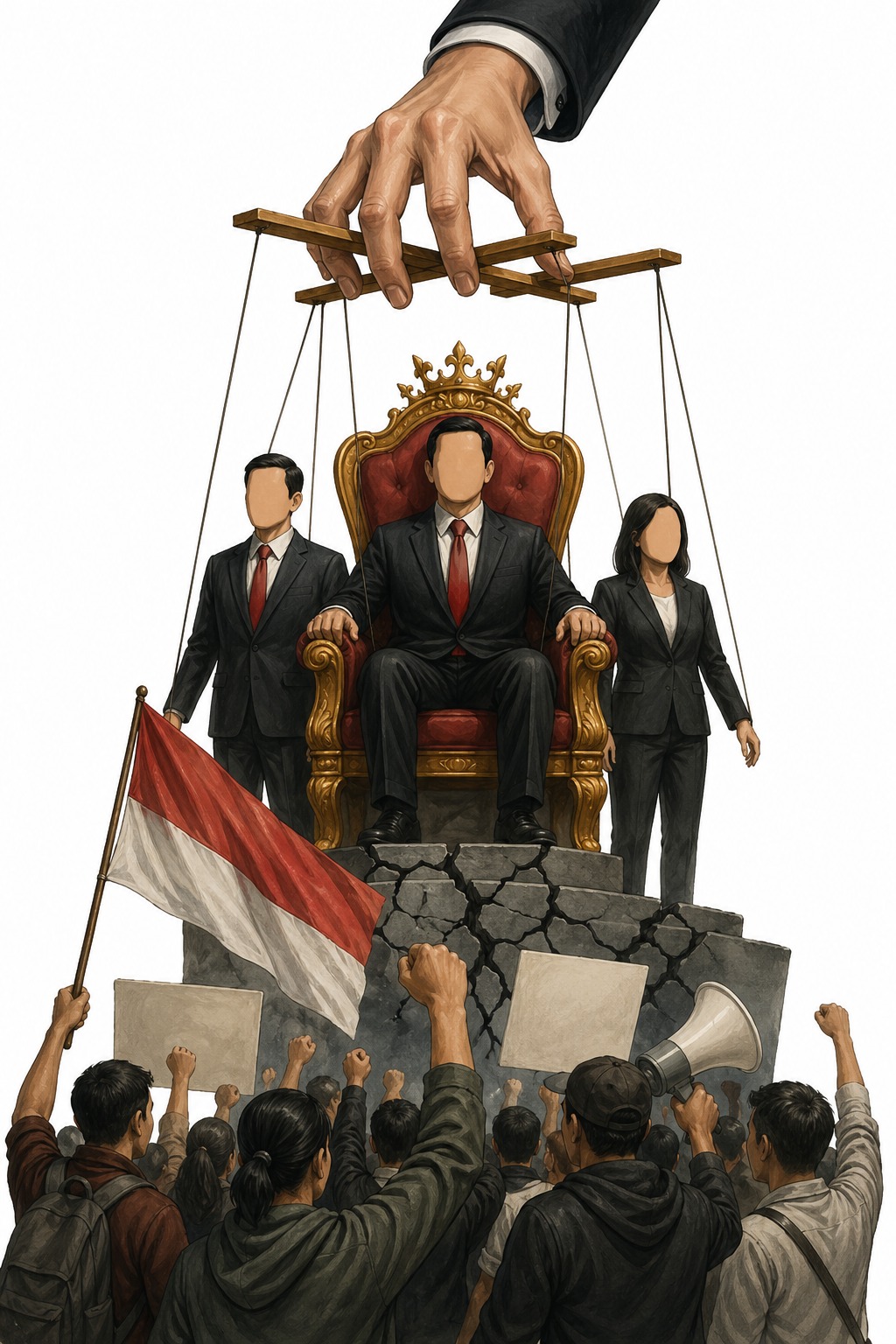
Background:Political dynasties represent an enduring challenge to democratic consolidation in Indonesia. However, the role of media discourse in shaping public perceptions of dynastic power remains under-explored, particularly regarding how editorial narratives frame dynastic politics and subsequent protest movements. Drawing upon Fairclough’s Critical Discourse Analysis (CDA) and Martin & White’s Appraisal Theory, this study conceptualizes editorials as discursive spaces where political legitimacy is systematically constructed and negotiated.
Methodology:This study analyzes three editorials published in The Jakarta Post in 2024: “Breaking A Dynastic Habit” (July 5), “People Have Spoken” (August 26), and “Thank You for Speaking Up” (August 29). These texts address political dynasties and protests triggered by the controversial revision of minimum age requirements for regional head candidates. This media outlet was selected for its prominent national standing, its English-speaking readership, and its influential role in shaping elite public discourse. The analysis integrates Appraisal resources (Attitude, Engagement, and Graduation) with Fairclough’s three-dimensional CDA framework. Attitude is employed to identify evaluative stances toward political actors; Engagement to trace the management of dialogic voices; and Graduation to assess the intensity of political event representations.
Findings:The results reveal a patterned evaluative asymmetry: political dynasties are represented through negative moral judgments and procedural critiques, whereas protest movements are framed as rational, ethically grounded civic responses. Intensification resources contribute to framing political dynamics as urgent or significant, while heteroglossic strategies allow for the inclusion of diverse voices while maintaining a specific evaluative position. These linguistic patterns indicate a systematic inclination to steer readers toward particular interpretations of political legitimacy.
Conclusion:Editorial discourse does more than report events; it constructs interpretative frameworks that influence the conceptualization of legitimacy and dissensus within the context of contemporary democracy.
Originality:This research extends the application of Appraisal Theory in ideological discourse analysis by demonstrating how evaluative language operates systematically to represent political actors and processes in a volatile democratic landscape.
References
REFERENCES
Anshori, S., Hidayah, J., & Zain, A. R. (2024). Attitude and Ideology in Media Reporting: A Case Study of Kompas's Coverage of The Free Nutrition Meals Program. Linguists, 10(2). DOI: 10.29300/ling.v10i2.4616
Aspinall, E., & As’ad, M. U. (2016). Understanding family politics: Successes and failures of political dynasties in regional Indonesia. South East Asia Research, 24(3). https://doi.org/10.1177/0967828X16659571
Bank, D. (2009). The Position of Ideology in A Systemic Functional Model. Word, 60:1, 39-63. https://doi.org/10.1080/00437956.2009.11432592
Elyamany, N. (2020): What Buddhist wisdom is going viral? A multimodalappraisal analysis of a selection of Jay Shetty’s digital narratives. The Social Science Journal, DOI: 10.1080/03623319.2020.1760074
Fairclough, N. (2003). Analyzing discourse: Textual analysis for social research. Routledge
Fairclough, N., Mulderrig, J., & Wodak, R. (2011). Critical discourse analysis. In T. A. van Dijk, Discourse studies: A multidisciplinary introduction (pp. 357-378). SAGE Publications Ltd
Fatimatuzzahra, N., & Dewi, D. S. K. (2021). The Pattern of Joko Widodo’s Political Dynasty Practices. Journal of Local Government Issues (LOGOS), 4(1), 1-12. https://doi.org/10.22219/logos.v4i1.15407
Fealy, G. (2020) Jokowi in the Covid-19 Era: Repressive Pluralism, Dynasticism and the Overbearing State, Bulletin of Indonesian Economic Studies, 56(3), 301-323, DOI: 10.1080/00074918.2020.1846482
Fitriani, S. S, Ananda, R., Irawan, A. M., Samad, I. A., & Weda, S. (2021). Representation of 212 Rallies in the Jakarta Post Articles: A Hybridity of CDA and SFL Analysis. Studies in English Language and Education, 8(1), 328-345. http://doi.org/10.24815/siele.v8i1.16836
Guodong, G., & Afzaal, M. (2023). Understanding political debates from the perspective of appraisal theory of China’s Belt and Road Initiative: A corpus-based critical discourse analysis. BRU ELT Journal, 1(1), 83-98. https://doi.org/10.14456/bej.2023.7
Hidayat, M. M. (2024). The 2024 General Elections in Indonesia: Issues of Political Dynasties, Electoral Fraud, and The Emergence of A National Protest Movements. IAS Journal of Localities, 2(1), 33-51 https://doi.org/10.62033/iasjol.v2i1.51
Kazmi, S., Noor, S. N. F. B. M., & Sanif, S. (2023). Social Actors’ Representational Role in Political Hard News Reporting: An Approach Through Attitude Analysis. Eur. Chem. Bull., 12 (S3), 271-285. DOI: 10.31838/ecb/2023.12.s3.036. (retrieved: http://eprints.uthm.edu.my/id/eprint/9431)
Kellner, D. (2003). Media Spectacle. London: Routledge
Kenawas, Y. C. (2023). The irony of Indonesia's democracy: The rise of dynastic politics in the post-Suharto era. Asian Journal of Comparative Politics, 8(3), 748-764. DOI:10.1177/20578911231195970
Luluardi, Y. D., & Diniyanto, A. (2021). Political dynasty in law and political perspective: To what extent has the election law been reformed?. Journal of Law and Legal Reform, 2(1), 109–124. https://doi.org/10.15294/jllr.v2i1.44321
Martin, J. R., & Wodak, R. (2003). Re/Reading the past: Critical and functional perspectives on time and value. John Benjamins. https://doi.org/10.1075/dapsac.8
Martin, J. R., & White, P. (2005). The Language of Evaluation: Appraisal in English. New York: Palgrave Macmillan
Mehleb, R., Kallis, G., & Zografos, C., (2021). A discourse analysis of yellow-vest resistance against carbon taxes. Environ. Innov. Soc. Transit. 40, 382–394. https://doi. org/10.1016/j.eist.2021.08.005
Pratama, I., Nurmandi, A., Muallidin, I., Kurniawan, D., & Salahudin. (2021). Social Media as a Tool for Social Protest Movement Related to Alcohol Investments in Indonesia. International Conference on Human Interaction and Emerging technology, pp. 138–146. https://doi.org/10.1007/978-3-030-85540-6_18
Risdianto, F., Sumarlam, Djatmika, & Wiratno, T. (2024). Appraisal and Ideology Realization in Indonesia State Capital Relocation News Texts. International Journal of Society, Culture, & Language, 12(2). https://doi.org/10.22034/ijscl.2024.2022445.3381
Santoso, B., Abdullah, A., Sjuchro, D. W., & Maryani, E. (2019). A Critical Discourse Analysis on Republika Newspaper Coverage: The Case Study of Hizb ut-Tahrir Indonesia’s Disbandment Plan. International Journal of Recent Technology and Engineering, 8(1). (retrieved: https://www.ijrte.org/wp-content/uploads/papers/v8i1S/A10120581S19.pdf)
Wang G., & Ma, X. (2021): Were They Illegal Rioters or Prodemocracy Protestors? Examining the 2019–20 Hong Kong Protests in China Daily and The New York Times, Critical Arts, DOI: 10.1080/02560046.2021.1925940
Downloads
Published
Issue
Section
License
Copyright (c) 2026 Sakut Anshori, Fahmi Gunawan, Arbain, Abd. Rahman Zain

This work is licensed under a Creative Commons Attribution-ShareAlike 4.0 International License.
Authors retain copyright and grant the journal right of first publication with the work simultaneously licensed under a Creative Commons Attribution 4.0 International License that allows others to share the work with an acknowledgement of the work's authorship and initial publication in this journal.